
Aluminum Foil Manufacturer: What Buyers Should Know Before Placing an Order
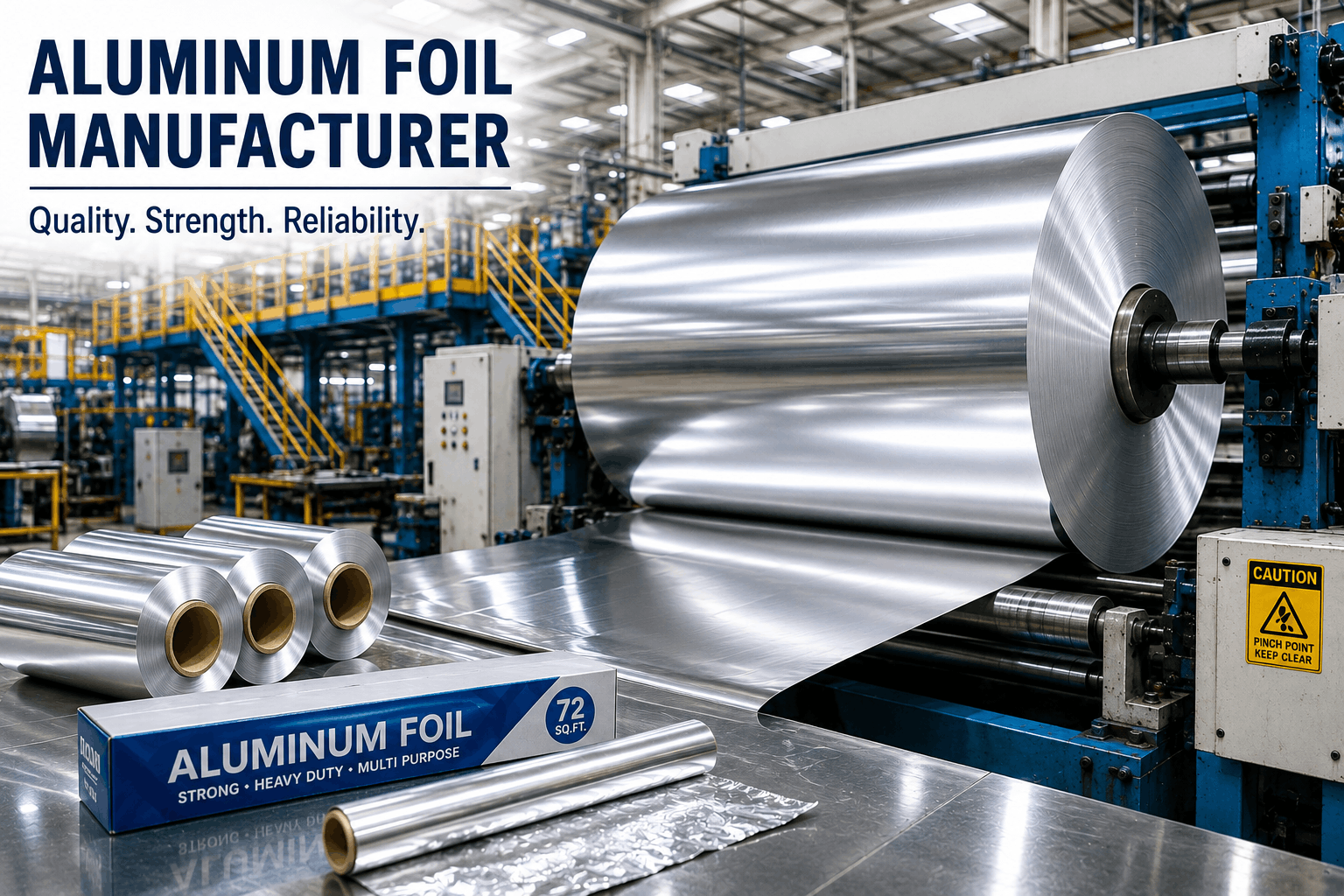
Type "aluminum foil manufacturer" into Google, and half the results are kitchen roll brands. If you're an engineer sourcing foil for a transformer or a cable shop looking for shielding stock, that's not remotely useful—and it's honestly a bit annoying to wade through. So before anything else, let's separate the two, because they're not even close to the same product.
Household foil is soft, thin, and meant for wrapping leftovers. Industrial foil is a completely different item—tighter tolerances, specific alloy grades picked for conductivity, and it ends up inside equipment rather than around a sandwich. If you're reading this, you almost certainly want the second one, so that's what we'll cover: alloys, thickness, common uses, and — probably the most useful part — how to tell an actual manufacturer from someone just reselling stock they bought elsewhere.
Not All "Aluminum Foil" Means the Same Thing
An aluminum foil manufacturer working in the electrical and electronics space usually produces foil for a fairly specific set of applications:
- Transformer winding, either as an alternative to wire or alongside it depending on the design
- Cable and wire shielding
- Capacitor construction
- EMI (electromagnetic interference) shielding
- Busbars and connectors
None of that has much in common with packaging-grade foil, and honestly, comparing prices between the two makes about as much sense as comparing a bicycle to a forklift because they both have wheels.
Alloys — What You're Actually Asking For
Most people don't walk in knowing the exact alloy they need, and that's fine, but it helps to know roughly what's being discussed. For electrical applications, 1050 and 1060 are the two you'll hear most often — high-purity grades, 99.5% and 99.6% aluminium respectively. The purity matters because it directly affects conductivity; the more aluminum, the better the foil conducts, which is exactly what you want when it's doing electrical work rather than just sitting there as a wrapper.
There are other alloys out there built for different priorities — better formability, extra strength, corrosion resistance for specific environments — but for winding and shielding, 1050/1060 covers most of what actually gets ordered. If a supplier starts pushing you toward something else without a clear reason, it's worth asking why.
How Thick Does It Need to Be?
This surprises people sometimes: industrial foil for electrical work is usually a lot thicker than what most of us picture when we hear "foil." Depending on what it's for, you'll typically see:
- Thin gauges for lighter shielding jobs
- A mid-range band, roughly 0.9mm to 1.5mm, that covers most transformer and cable applications
- Heavier gauges up toward 3.0mm for higher current or more mechanical stress
A supplier worth using should be able to hit whatever's in that range, not just whatever happens to be sitting on their shelf. "Close enough" on thickness sounds fine until the equipment's under real load, and then it isn't.
Why Use Foil Instead of Wire at All?
Fair question, and one we get asked more than you'd think. Foil winding isn't better than wire winding across the board—but in certain transformer designs, it has real advantages. It spreads current more evenly across the winding, handles higher current density in less space, and in some configurations reduces certain electrical losses compared to round or rectangular wire. For a standard motor or general transformer, wire is still simpler and cheaper, and there's no reason to overcomplicate it. But for higher-current or space-constrained designs, foil earns its place, and engineers who've worked with both usually know exactly when to reach for it.
The Part That Actually Matters Most: Manufacturer or Reseller?
Here's the thing nobody tells you upfront. A lot of the companies that show up when you search "aluminum foil manufacturer" aren't manufacturers at all—they're traders who buy stock in bulk and resell it. That's not necessarily a problem, but it changes what you should expect from them, and you deserve to know which one you're actually talking to.
A genuine manufacturer should be able to:
- Tell you the exact alloy composition—not a vague "it's a 1000 series" answer
- Run custom thickness or width orders instead of only offering pre-cut stock
- Hand over mill test certificates for the specific batch you're buying, not a generic spec sheet
- Talk through how the foil performs in your actual application—winding, shielding, whatever it is—rather than just quoting a rate per kilogram
- Keep quality consistent across batches, which matters a lot more once you're placing repeat orders instead of a single one-off
If someone can't answer a basic question about alloy or testing without putting you on hold to "check with the mill," that's usually your answer right there.
Quick Questions People Actually Ask
What alloy is used for electrical-grade aluminum foil?
Mostly 1050 and 1060—high-purity grades (99.5%–99.6% aluminum) chosen because purity translates directly into better electrical conductivity.
What is industrial aluminum foil used for?
Transformer winding, cable and wire shielding, capacitor construction, EMI shielding, and busbar fabrication—anywhere conductivity and precise thickness matter more than general toughness.
How thick is aluminum foil used in transformers?
It depends on the design, but a common range is roughly 0.9mm to 3.0mm, scaling up with how much current the foil needs to carry.
Is foil winding better than wire winding?
Not across the board. It's better for certain higher-current or compact transformer designs, but wire is still the more practical, cheaper choice for standard motor and transformer work.
Before You Place an Order
If you take one thing from this: ask for the mill test certificate on the actual batch you'd be buying—not a generic PDF spec sheet that could describe any batch from any year. Ask what alloy they're actually running, whether they can match your exact thickness instead of nudging you toward their nearest stock size, and whether they've supplied that kind of foil for an application like yours before. A real manufacturer answers all of that without needing to check with anyone.
It's also a decent sign when a supplier makes more than just foil—winding wires, fiber glass-covered conductors, that kind of thing. It usually means they understand where the foil is actually going, not just how to roll it.
Got a spec or an application in mind? Send us the alloy, thickness, and end use, and we'll give you a straight answer on whether it's something we can run.